Medical Billing Automation in 2026: 5 Questions to Ask at the MGMA Annual Conference


As medical billing automation becomes a bigger revenue cycle priority for medical practices, decision makers need a sharper way to evaluate what software solutions do, which functions still require human judgment, and where and how automation can improve daily billing work.
The upcoming MGMA Annual Conference in San Antonio, being held Sept. 27-30, is an opportunity to get clear answers. Below are five questions to ask vendors that can help separate real capabilities from the promises included in a polished demo.
What Medical Billing Automation Actually Means in 2026
Medical billing automation uses software to complete or support repeatable billing tasks, such as eligibility checks, claim scrubbing, payment posting, and denial routing. The goal is to reduce manual work, improve consistency, and give billing teams more time for handling the claims, appeals, and exceptions that require human judgment.
The useful distinction is between automating a task and automating a decision. Task automation is easier to evaluate: Did the eligibility check run? Was the claim reviewed? Was the payment posted? Decision automation requires more scrutiny because the system may recommend what happens next.
Question 1: What Exactly Is Being Automated?
The fastest way to test a medical billing automation claim is to ask the vendor to name the specific step being automated.
A strong answer will be a concrete one. The system may verify eligibility, identify missing claim elements, route a denial, or post payments based on remittance data. Those are defined tasks with a clear before and after.
A vague answer may focus on “smarter billing” or “less manual work” without naming the task, user, trigger, or output. Automation is most mature in eligibility verification, claim scrubbing, payment posting, and denial routing. If staff still find the account, interpret the issue, enter information, and decide where work goes next, the system may be organizing work rather than automating it.
You might ask: “Show me the exact step your system completes without staff intervention.”
Question 2: What Happens to a Claim the System Cannot Handle?
Exception handling is where automated medical billing projects usually succeed or fail.
No system handles every claim perfectly. Claims can involve missing documentation, payer-specific rules, unusual coverage details, coding questions, or conflicting information. The issue is what the system does with them.
Practice leaders should ask: What percentage of claims falls out? Where do those claims go? Who works them? Does the system learn from repeated exceptions?
If a vendor cannot quantify the fallout rate, they may not be measuring closely enough. A good answer should show the exception path, explain what triggers the exception, identify what information is attached, and show how staff are notified.
Question 3: Does It Work Inside the EHR or Beside It?
Integration is one of the most important questions in medical billing automation software.
A billing tool can look impressive in a demo and still create extra work if it operates outside the systems staff use every day. If users need a second login, repeated exports, manual uploads, or reconciliation, the practice may shift work rather than reduce it.
Integrated billing automation should read and write to the same record the clinical workflow uses. That helps billing teams see context from the patient record, encounter, claim, payer response, and work queue without copying data between systems.
Ask vendors to show the workflow from start to finish. Where does the billing task begin? What record does it use? What does the system update? What does the user see next?
For a worked example of revenue cycle operations at scale, see how eClinicalWorks RCM customer Compass Health Systems is managing $7 million in monthly claims using just two members of their staff.

Question 4: What Does It Do to Denials, and How Do You Know?
Denials are one of the clearest tests of a billing automation claim. If a system says it improves billing performance, practice leaders should ask how that improvement is measured.
The better question is: “What was the baseline, what changed, over what period, and how do you know automation caused the improvement?”
Denials can change for many reasons, including registration updates, staff retraining, payer mix, documentation changes, coding workflows, or new review processes. If those changes happen with automation, the vendor should explain what came from technology and what came from process change.
Be cautious with “reduced denials by X%” when there is no denominator, time period, or measurement method. Ask what categories were tracked, what claims were included, and how the practice separated preventable denials from other payer behavior.
Question 5: What Changes for the People Doing the Work?
When routine work is automated, billing staff can spend more time on complex claims, appeals, payer follow-up, and the issues most likely to affect revenue.
Practice leaders should ask what daily work changes after implementation. Which tasks go away? Which remain? Which roles are involved? How are work queues organized? What reporting shows whether the process is improving?
Training and change management also matter. A vendor should explain the implementation timeline, who leads the project, what training is included, and how the practice will know whether adoption is working.
Bring Your Questions and Visit Us at MGMA
The MGMA Annual Conference takes place Sept. 27-30, 2026, in San Antonio. MGMA is marking 100 years of bringing the practice management community together.
If you are attending, bring these five questions into your vendor conversations. And be sure to stop by the eClinicalWorks booth to learn about our Revenue Cycle Management and billing automation solutions.
Related Post

- 12 November 2025
- Blog
Rx for Healthcare: A Daily Dose of Responsible AI

- 19 June 2025
- Blog
How AI Can Cut Collection Costs and Improve Healthcare


- 16 January 2025
- Blog
The Transformative Journey of an Endocrine Practice
- 7 November 2024
- Blog
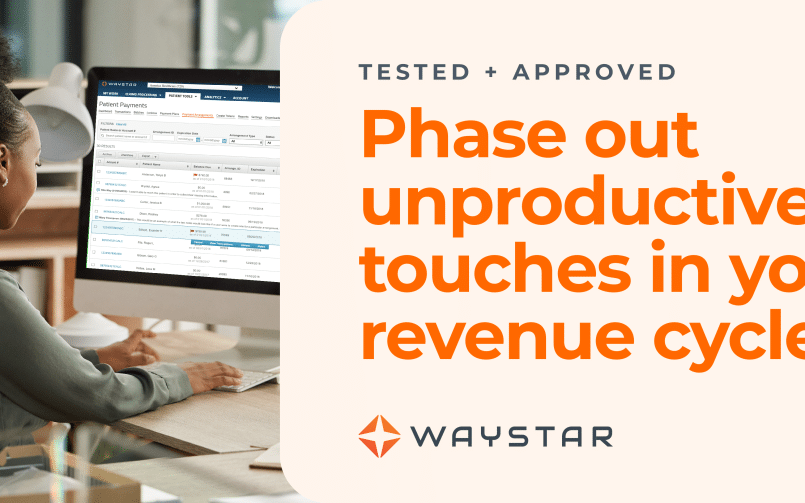
3 Ways to Change Unproductive Touches in Your Revenue Cycle

- 20 September 2024
- Blog
Revenue Cycle Management: Boosting Operational Efficiency and Productivity

- 27 June 2024
- Blog
Optimizing RCM for Growth Today and Tomorrow

- 3 May 2024
- Blog
The Bots Are Here to Help
- 15 June 2021
- Blog
Make Billing Easier and Better
Recent Posts
-

2026 eClinicalWorks and healow National Conference: Your Nashville Checklist
-
CCM and RPM Together: How One Practice Grew Enrollment From 200 to 1,400+
-
The 2026 eClinicalWorks National Conference: Nashville Awaits You
-
Medical Billing Automation in 2026: 5 Questions to Ask at the MGMA Annual Conference